November 10, 2023

Dogs and Cats and Pigs

There is quite a different situation regarding dogs and cats in Peru and I suspect in most Central and South American countries.  First of all, very few cats were to be seen on this trip, and I think that the few that we saw were feral.  Maybe we didn’t see more of them because they were mostly out at night.  I am a sucker for cats since I have one of my own.  The kitten at the top of this post looks a lot like the cat I have at home.  I wanted to scoop her up and take her back with me!

This one was huddled on the sidewalk outside out hotel in Chiclayo.

About half way through the trip, while still in the Northern coastal area, we ate lunch at an out of the way open air restaurant. 

Hanging around were a mother cat and 4 almost grown kittens.  2 calicos and 2 tabbies.  The staff of the restaurant would shoo them away routinely.  I do not know what they ate, but we took the opportunity to drop morsels of food down to them when no one was looking.  They would eat anything, as opposed to cats in the Western world that can be quite picky.  I even reached down to scratch the mother cat on her head, and she meowed at me in response.


Dogs were another matter altogether.  They roamed the streets at will, but we were told that they were not strays, even though very few had collars.   All of them looked well cared for, groomed and well fed.  After one of the ladies I was walking around Aguas Calientes with gave a nice looking German shepherd a scratch on the head, he followed us back to our hotel, only to be chased away by the security guard.  Most dogs however, did not welcome human contact or being touched.  If you had food, that was probably another matter. 

Here are dogs at the parking lot to Chan Chan.  The one on the hill was clearly the top dog of the pack.


These hairless dogs were being kept and bred on the grounds of the National Museum of Sipan.

This chunky beagle was patrolling the village square in Pisac.
It was not unusual to find a dog napping right on the sidewalk.  One had to be careful not to step on them.

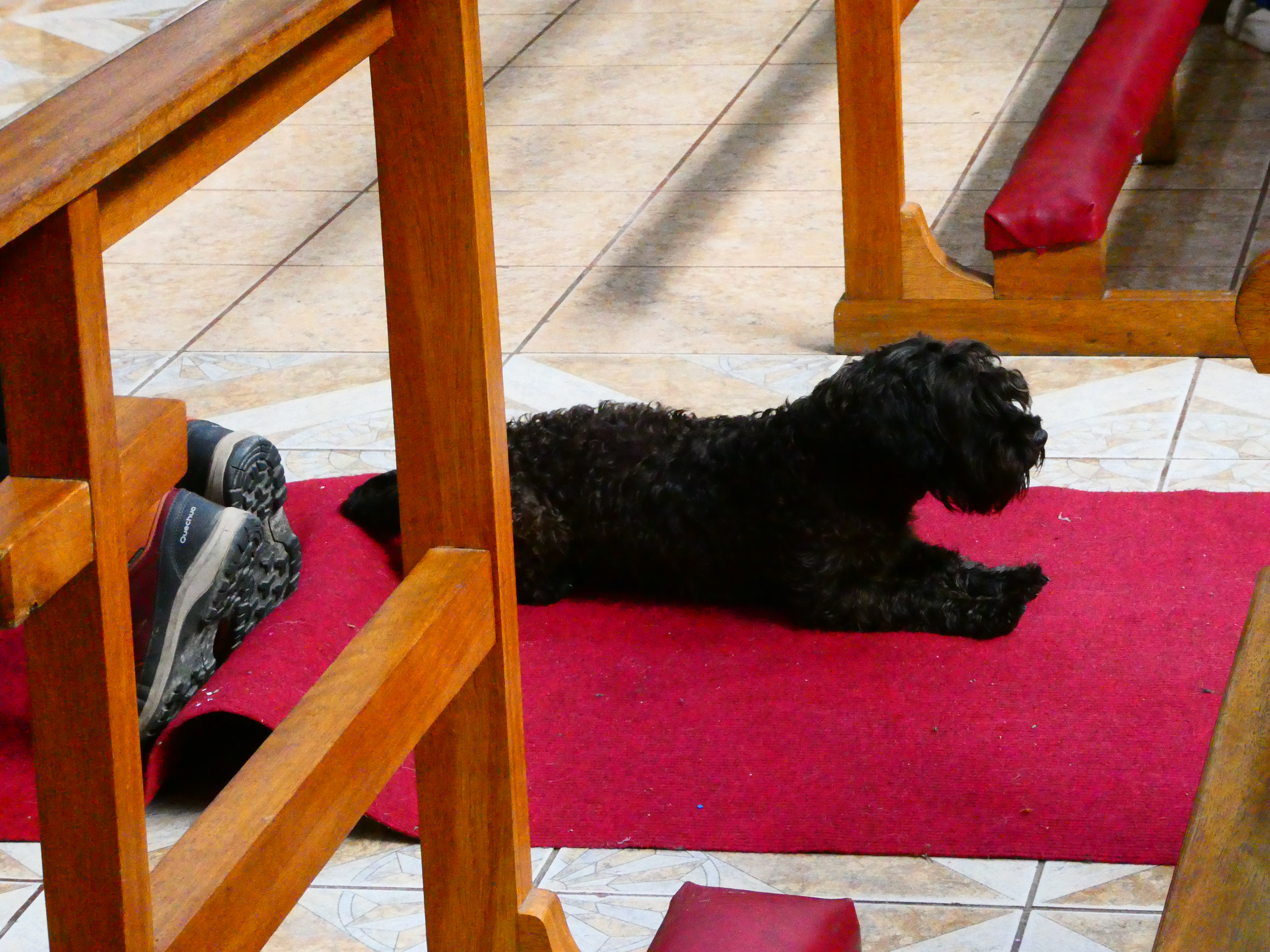
This cutie was hanging out inside the local church in Aguas Calientes. 
So here is the scoop.  Most people who own dogs let them out in the morning so that they can roam and play with their friends.  They have quite a life of their own.  It is assumed that they return home at night or when they are hungry.  A lot of them hang around where their owner works—a shop or restaurant.   In Cusco, we saw a few with coats on.  In Lima, we were staying in the nicer part of town, and we saw numerous dog walkers out with multiple dogs each. 

I remember years ago when we were camping out at Raqchi in Peru when the village dogs started to hang around.  They all looked to be on the scrawny side.  Then the top dog in charge arrived.  He was medium size, well fed, black and had a spiked collar on.  Clearly he was there to “boss” the rest of the dogs.

And of course there are the guinea pigs.  They are not pets, but are eaten on special occasions.  Most households raise them. Here we were visiting a traditional household in Ollantaytambo.

Here is our guide Diana who caught one.  You could tell that she was happy to have made her catch.
There are a few restaurants near Pisac that advertise guinea pig meals.  For the tourists no doubt. This is how they advertise outside their restaurants.
Interesting that if you search the internet for guinea pig, you get the pet.  If you search for cuy, the Quechua word for them, you get meat.  I prefer neither!

November 7, 2023

Eclipse Day

So here it was, October 14th, the day of the annular eclipse of the sun.  The path of the totality of the eclipse ran right through Utah, and if I was home, I would have enjoyed that exceptional occurrence.  Before leaving on this trip, I checked to see how much of an eclipse we would have in Peru.  That was about 70%.  Pretty good!

This was also the day when we visited the tomb and all of the artifacts of the Lord of Sipan.  That morning, we went to the Huaca Rajada-Sipan, first going through the small onsite museum.   Then up the hill to the actual huaca where 16 royal tombs had been discovered.

All of the artifacts had been removed for restoration when the tomb was discovered, and the actual tombs were reconstructed so that one could see how they were laid out. 


Here is a link for the Huaca Rajada-Sipan.

The totality of the eclipse would happen at about 1:05 PM, and I was hoping that we wouldn’t miss is, so I was keeping my eye on the time.  We happened to be eating lunch in Lambayeque at that time.  Fortunately, we were at a somewhat open air restaurant.  In the back of the restaurant was where some ladies were washing dishes, and the ceiling of that room was actually a woven reed affair with lots of spaces where the reeds crossed.  There was also an area of some tall plants near our table. 

As many of you may know, a way of looking indirectly at an eclipse is at the shadow of the sun shining through a small hole in a piece of paper, or between the leaves of a tree.  At exactly 1:05, I got up and went over to where the sun was shining between the leaves of the nearby foliage.

At the same time, I looked into the room at the back of the restaurant and saw hundreds of little crescent moon shapes on the floor.  Wow!!!  When I went back there, the dish washing ladies asked if they could help me, and all I had to do was to point to the floor and start taking photos.  They must have thought I was nuts!  It didn’t take long for several others of our group to do the same.  What fun.


The afternoon was spent at the Museo Tumbas Reales de Sipan, or the Museum of the Royal Tombs of Sipan.  This is where all of the restored artifacts from the tombs are on display.  Fabulous wealth!  The Lord of Sipan was a high status Moche ruler around the year 250 A.D.  He died when he was approximately 40 years old, and was buried with 8 other people, a dog and 2 llamas who were undoubtedly sacrificed to be buried with him.  Here is a link for more information on him and the discovery of his tomb. 

November 6, 2023

The Northern Coast


The main reason I had for returning to Peru once again was to visit the northern coastal area of the country, home to the ancient Moche, Sican, Chimu cultures.  All of these preceded the Inca conquest.  In fact, the Inca barely made it to the northern shore before the Spanish arrived.  Here is a link to information on the Moche culture of the Northern Coast.

Since this is a coastal area and a giant flood plain created by debris washed down from the Andes Mountains during rainy seasons, there is no building material per se.  So all of the sacred temples, or huacas, were constructed of mud bricks.  The terrain is relatively flat and green.  We drove through fields of sugar cane, corn, and rice.  Every once in a while, one could see what appeared to be a small mountain that was sandy colored and badly furrowed by erosion.  These were the huacas, which were ceremonial sites and burial grounds of the elite.

We visited several of these.  We first toured through either the ceremonial areas of the site, or the actual tombs of the elite that had been buried there.  The tombs had been reconstructed so that one could see how that person was buried. They were also deep underground.


The ceremonial sites of the Moche featured themes of conquest of their enemies and ceremonial or non ceremonial sacrifices of humans and an occasional llama.  Their god was “The Decapitator”.  That should tell you a lot!  I could feel the heavy energy of the activities that took place there. 

Then, each site had a museum that housed the actual artifacts that were removed from the tombs.  Lots of golden objects, adornments of shells and semi precious stones, fine carvings, and jewelry.  Here is a necklace that I'd love to have!


In 1987, the tomb of the Lord of Sipan was discovered.  Some say that this was the greatest archaeological discovery of the 20th century.  It was fabulous, but I would vote for King Tut!  Below is a statue of the Lord of Sipan in his ceremonial garb.  Here is a link if you want to learn more.

After a while, going through museum after museum, it all became a blur.  One very interesting display at one of the last museums that we went through showed a San Pedro cactus healing ceremony.   That brought back memories of my shamanic training.  The shaman spreads out his blanket and arranges all of his healing tools and potions on it.  At the opposite end of the blanket, he lines up several swords that are stuck straight into the ground. The client stands behind the swords.The shaman and the client both drink the San Pedro, so both are in an altered state during the healing.  As the shaman chants, he can see an energetic connection go out from himself and through one after the other of his healing tools and ending up at one of the swords.  Then that sword starts to sway forwards and backwards.   He then completes the healing using the objects on his blanket that were indicated. 

We visited a site called “El Brujo”, the witch, where the Senora de Cao’s tomb was found.  She was the highest status female burial ever found in Peru.  This huaca was right by the ocean, and was pretty eroded. 


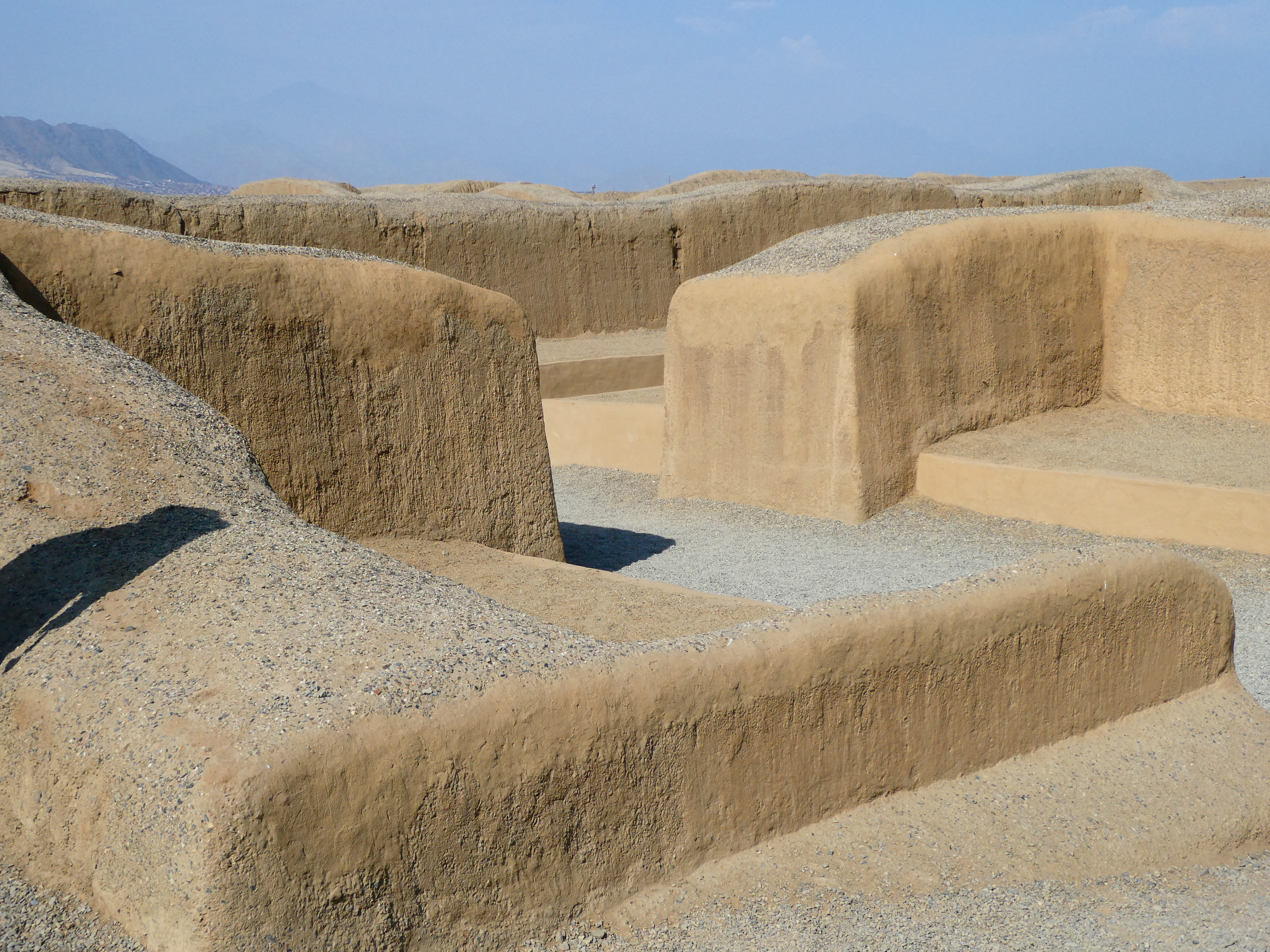
This is Chan Chan, a huge site that was the capital of the Chimu Kingdom, which reached its apogee in the 15th century, not long before falling to the Incas. It was the largest earthen architecture city in pre-Columbian America.  Here is a link for more on Chan Chan.


One big surprise for me was the presence of burrowing owls at many of the sites.  In the United States, these owls live mostly in abandoned prairie dog burrows in the summer, and then they migrate south in the winter.  There in Peru, they were permanent residents and did not migrate.  They nest in cavities in the ruins, and sometimes dig their own.  Apparently when I was there, it was their mating season.  We saw lots of fighting and chasing among the owls. It was quite entertaining!   In fact, at one site, there was so much of that going on that no one really listened to the local guide giving his talk.


So there you have it.  More to come!